
Intermittent Fasting: 9 Registered Dietitians Share Their Expert Opinions
Intermittent fasting (IF) is the latest health trend people are buzzing about, but does it really contain all the magical health benefits we’re being told it does? 9 registered dietitians share their expert opinions on the topic.
I receive a decent amount of questions in my inbox or on Instagram in regards to Intermittent Fasting, and while I do have my own thoughts on the subject, I felt it was most appropriate to ask the experts and do a dive deep into the hard facts around IF.
Curious if IF is right for you? Continue reading to learn a summary of what intermittent fasting is, hear 9 registered dietitians expert opinions on the subject, and my personal thoughts.
First of all, what IS intermittent fasting?
Intermittent fasting involves alternating periods of fasting and eating. Intermittent fasting doesn’t tell you what to eat, but rather it tells you when to eat.
If you’re anything like me, the word “fast” is enough to make you stop reading altogether and run to the pantry for your favorite snack…
How do you practice intermittent fasting?
There are several ways to practice intermittent fasting, but the most popular form of IF is time-restricted fasting.
16/8 and 14/10 methods are common examples of time-restricted fasting.
This means restricting for 16 hours and eating within an 8-hour time-frame, or restricting for 14 hours and eating within a 10-hour time-frame. You’re “allowed” to drink water, tea, and coffee and take supplements during the fasting period, as long as they’re all non-caloric (AKA skip the cream and sugar). Putting it simply, you cannot eat anything during the fasting cycle.
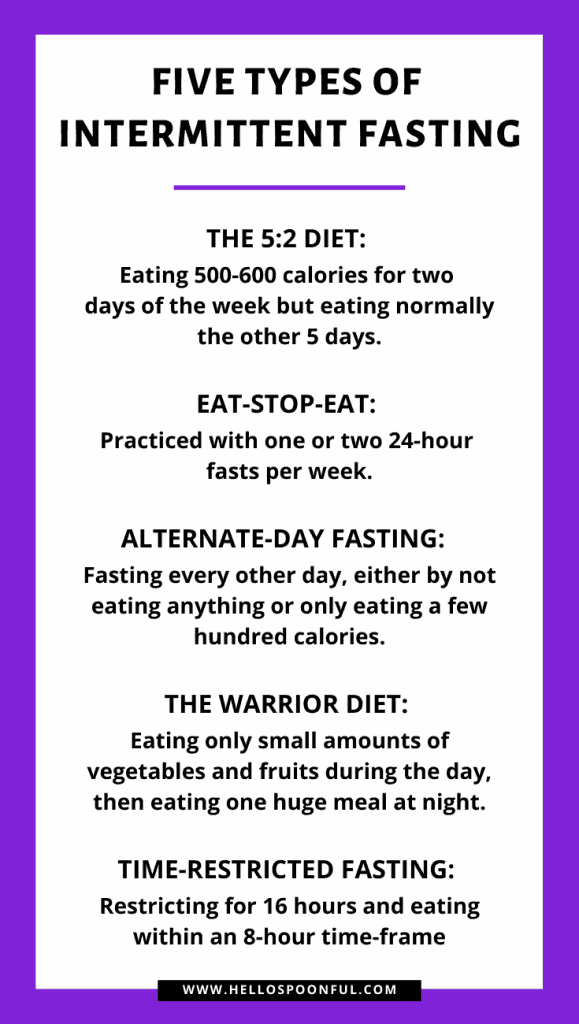
What are the five types of intermittent fasting?
- The 5:2 diet — This type involves eating 500-600 calories for two days of the week but eating normally the other 5 days.
- Eat-Stop-Eat: This form of intermittent fasting is practiced with one or two 24-hour fasts per week.
- Alternate-day fasting: Fasting every other day, either by not eating anything or only eating a few hundred calories.
- The Warrior Diet: Eating only small amounts of vegetables and fruits during the day, then eating one huge meal at night.
- Time-Restricted Fasting: Discussed above.
My personal thoughts on intermittent fasting:
As someone who has a history of disordered eating, exercise addiction, and an obsessive personality, it’s obvious IF isn’t right for me. The title “time-restricted” fasting is a HUGE red flag that this isn’t something I want to (or should) participate in.
Waking up and wondering if I’m “allowed” to take my omega-3 supplement because it contains calories or if almond milk in my coffee will break my fast would ultimately add more stress to my life.
I also think many people practice IF simply as an excuse to skip breakfast in hopes of cutting calories, rather than practice it for the potential health benefits. Cutting calories shouldn’t be the goal in intermittent fasting. The goal is giving your digestive system a break and regulating blood sugar control.
I don’t believe practicing IF is “wrong” or “bad”. If you practice IF and feel great, go for it! Like anything in life, you have to do what’s best for you.
You can read more about my health approach and thoughts in my book, Redefining Wellness.
What 9 health experts have to say about intermittent fasting:
Should women practice intermittent fasting?
“I believe #intermittentfasting can wreak havoc on female hormones and there have only been 2-3 studies done on females, mostly rats. If you’ve had any form of orthorexia, IF can only fuel that. Some studies show IF can help with fasting blood glucose levels but other more sustainable ways of eating can also help that. So while I’m not saying you have to “eat within an hour of waking”, you also don’t need to be strict about an eating “window”.
— Deanna Wolfe, MS, RDN | Founder and CEO, Dietitian Deanna, LLC
What are the pros and cons of intermittent fasting for women?
“One of the benefits of intermittent fasting is that it promotes cell autophagy: the self-cleaning process that breaks down and recycles damaged cells. Another benefit is that it helps our body become LESS reliant on glucose as our main energy source, as we’re forced to dip into our energy stores.
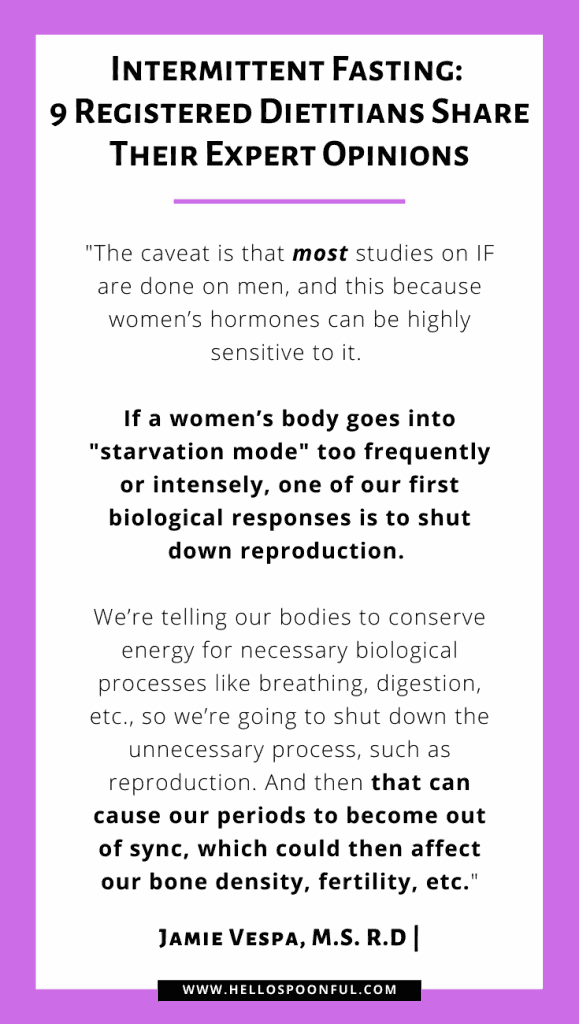
The caveat is that MOST studies on IF are done on men, and this because women’s hormones can be highly sensitive to it. If a women’s body goes into “starvation mode” too frequently or intensely, one of our first biological responses is to shut down reproduction. We’re telling our bodies to conserve energy for necessary biological processes like breathing, digestion, etc., so we’re going to shut down the unnecessary process, such as reproduction. And then that can cause our periods to become out of sync, which could then affect our bone density, fertility, etc.
Another danger is for men or women with a history of disordered eating because it can push them to become further out of tune with their body’s natural hunger cues.
I think HEALTHY fasting is about 14 hours, so maybe your eating “window” is from 9 am-7 pm. However, if you’re going to implement time-restricted eating, I think it’s also important to consider the time you’re eating from a circadian rhythm standpoint. And the easiest way to think of this is to reference how our grandparents ate (dinner at 6 pm!). Eating super late at night isn’t as ideal because our body is digesting/processing foods when it should be in more of a resting phase.”
— Jamie Vespa, M.S. R.D | Dishing Out Health
What does the research say on intermittent fasting for women?
“There is some emerging research on IF that looks promising in terms of potential health benefits such as fat loss and blood sugar control; however, the bottom line is there is still a LOT of research to be done on the long term effects in humans. In addition, females may react differently to fasting than men due to differences in hormones, so it’s important to watch for changes in menstrual cycles or any other negative symptoms. We would definitely not recommend intermittent fasting for anyone who has a history of an eating disorder or disordered eating.
At the end of the day, each individual has to do what works for them and pay attention to what helps them feel their best. If fasting for 12-16 hours makes you feel awesome and you don’t have any issues with extreme hunger, headaches, lightheadedness, symptoms of low blood sugar, or preoccupation with thoughts about your next meal, then great! Go for it. Just know that it’s not a magic pill and it’s definitely NOT the only way to lose weight and/or improve health, despite what you might see on social media. If this pattern of eating isn’t realistic for your lifestyle, know that it’s not your only option. Listening to your body’s internal cues can help guide you as well.
In addition, there are many other factors that go into weight management and overall well-being, including the quality of your diet (not just the window in which you are taking in calories), your exercise routine, sleep, stress management, certain health conditions/medications, genetics, and more. A lot of individuals (even those not intentionally doing IF) skip breakfast, then eat very little during the workday due to their busy schedules, and end up taking in the vast majority of their daily calories in the evenings. People like this may benefit simply from distributing their calorie intake more evenly throughout the day to help them eat smaller quantities in the evenings, and don’t necessarily have to follow a strict IF eating pattern to see benefits. If you find yourself doing a lot of grazing/snacking in the evenings, ask yourself if you have eaten enough throughout the day and/or if you’re eating foods that actually satisfy you, as these factors can make a huge difference too! More on that in this blog post.”
— Shanna Hutcheson, R.D. | Wellness For The Win

Does intermittent fasting put too much stress on the body?
“My goal as a registered dietitian and certified intuitive eating counselor is to help my clients stress less about food, and feel better physically and mentally, and I don’t see intermittent fasting as something that is helpful for those goals. Intermittent fasting may be the latest weight loss diet trend, but just like all other diets that have trended before it, there’s zero research showing it can help more than a small number of people lose weight and keep it off permanently, and the majority will gain back more than they lost.
What I see in my practice are the side effects of IF that isn’t usually talked about – obsessing about food (and the clock!), headaches, fatigue, hypoglycemia, dysregulation of hunger and fullness cues, binge eating, and mood swings. Remember, your brain is an organ that requires a lot of energy and regular input of fuel from food. And going long periods of time without eating often leads to overeating and binging from extreme hunger. Instead of intermittent fasting, I encourage clients to eat a meal or snack every 3-4ish hours, which will help keep you energized, stimulate digestion, and help regulate hunger/fullness cues.”
— Rachael Hartley | RD, LD, Certified Intuitive Eating Counselor; Rachael Hartley Nutrition
Does intermittent fasting help with weight loss?

How long should women fast for when intermittent fasting?
Is intermittent fasting too restrictive?
“Intermittent fasting restricts your eating window each day and the time frame varies depending on the plan followed. Overall, I’m not a fan of IF personally, but I do think some people naturally eat in an IF fasting window, and it’s not restrictive for those people. Finding out what hours your body normally needs food to feel its best is better than jumping onto an IF plan.
Nutrition should be individualized and you shouldn’t feel guilty if you’re eating a meal outside of a set time frame.”
Does intermittent fasting help with digestion?
How does intermittent fasting impact women?


This was so helpful. Thank you.
So glad you found it helpufl! Thanks for reading!
Loved how you incorporated various RD points of view and didn’t stick with ‘one’ agreeable answer!
I love reading the opinions of these 9 Registered Dietitians! I have great respect for RD’s and believe they are the authority when we have dieting questions!
This was super helpful and insightful. Thanks so much!
You’re so welcome! Glad you enjoyed it 🙂
How does IF works if you chose 14 hours fasting?
You would restrict yourself for 14 hours and eat within a 10-hour time-frame. You’re “allowed” to drink water, tea, and coffee during the fasting period, as long as they’re all non-caloric (AKA skip the cream and sugar). Putting it simply, you cannot eat anything during the fasting cycle. You can skip around and read all the experts’ opinions on a 14 hour fast in this post as well. Hope that helps!